


Hey there, card game enthusiast! Ready to dive into a fun and easy-to-learn game that’s perfect for family gatherings or a chill night with friends? Let’s explore the world of the Golf card game. No, you won’t need a caddy or a set of clubs, just a deck of cards and a keen strategy. Let’s tee off! Check out KEY365 to know more
Origins and Appeal
The Golf card game is a delightful, easy-to-pick-up game that borrows its name from the sport of golf due to the scoring system — the aim is to have the lowest score possible. This charming game has been a favorite in many households for generations, offering a blend of luck and strategy that appeals to players of all ages. Its simple rules allow even the youngest family members to join the fun while providing enough depth to keep adults engaged.
Ideal for Various Settings
Golf is perfect for 2 to 6 players and can be played with a standard deck of cards. Whether you’re hosting a casual get-together or looking for a quiet evening activity, this game fits the bill. It’s adaptable to different group sizes and settings, making it an ideal choice for everything from family game nights to holiday gatherings.
Duration and Replayability
The game typically lasts around 30-60 minutes, depending on how many rounds you play. Its moderate length ensures it can be enjoyed even with limited time, while its replayability offers endless enjoyment. Each round brings new challenges and strategies, encouraging players to refine their tactics and strive for victory in future games.
Setting Up the Game
What You’ll Need
To get started, all you need is a standard 52-card deck (or two decks if you have more than four players) and a flat surface for playing. The simplicity of the required materials makes Golf an accessible game that you can enjoy almost anywhere. Whether you’re at home, on vacation, or at a picnic, the ease of setup is one of its greatest strengths.
- Players: 2 to 6
- Deck: Standard 52-card deck
- Objective: End the game with the lowest score
Preparing the Deck
Shuffle the deck thoroughly to ensure that cards are mixed well, which adds an element of unpredictability to the game. A well-shuffled deck is crucial for fair play, preventing any pattern recognition that might give players an undue advantage. Once shuffled, deal each player six cards, face down. The remaining cards form a draw pile, and the top card is placed face-up next to it to start the discard pile.
Establishing the Play Area
Arrange the play area comfortably so each player has enough space to manage their cards. A spacious and organized setup can enhance the gaming experience, minimizing clutter and confusion. Ensure that everyone can easily reach the draw and discard piles, facilitating smooth gameplay and interaction among players.
Understanding the Card Values
Before we jump into the gameplay, let’s break down the card values. Understanding these values is key to developing your strategy and making informed decisions during the game.
Point Breakdown
- Aces: 1 point
- Number Cards (2-10): Face value
- Kings: 0 points (the best card!)
- Queens and Jacks: 10 points each (watch out for these!)
These values are essential for strategizing as you aim to swap high-value cards for those with lower points. Recognizing the significance of each card helps you prioritize which to keep or discard.
Strategic Importance of Kings
Kings are your best friends in this game due to their 0 points. Having a King in your hand means you’re closer to achieving a low score. Strategizing around acquiring and retaining Kings can be pivotal in securing victory, making them highly sought after during gameplay.
The Challenge of Face Cards
Queens and Jacks, with their 10-point values, are your arch-nemeses. They can quickly inflate your score if not dealt with promptly. Understanding the risk these cards pose encourages players to focus on swapping them out swiftly to maintain a competitive edge.
Basic Gameplay
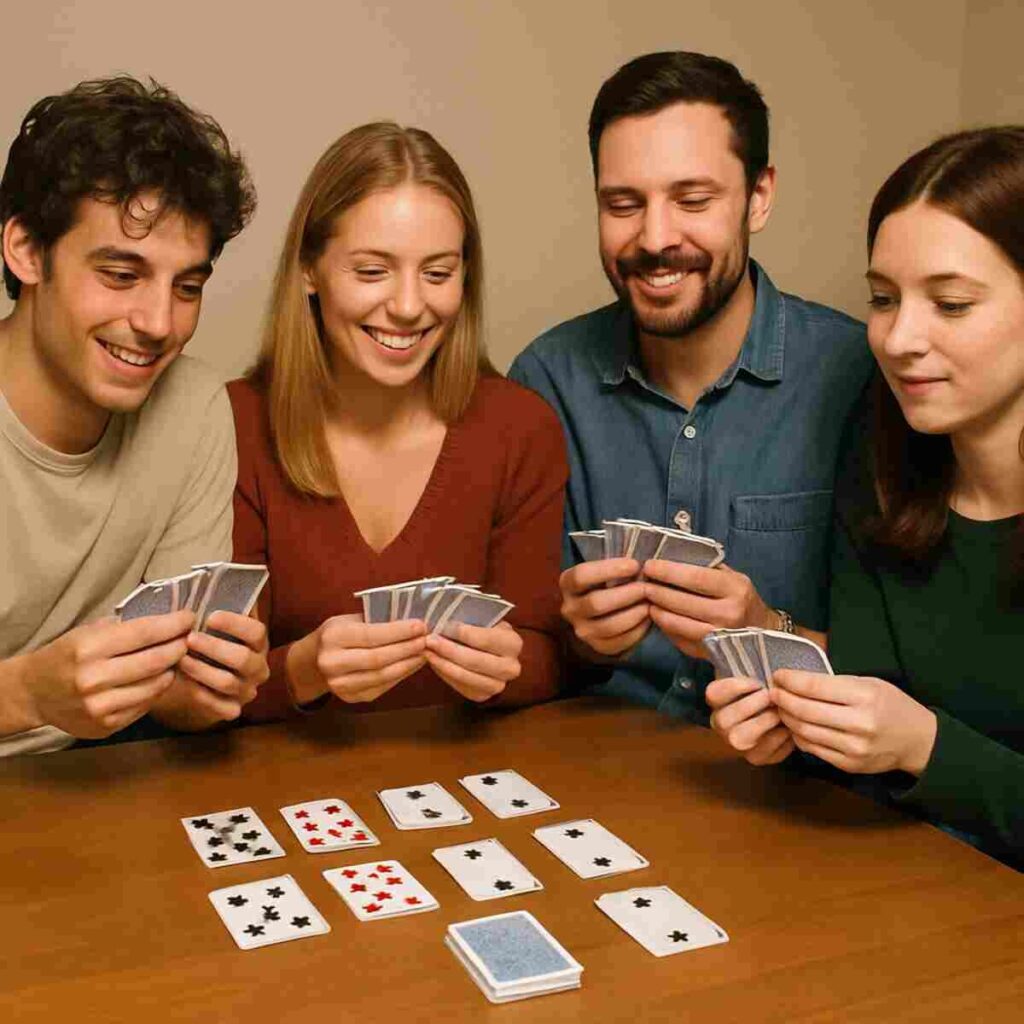
Each player’s goal is to achieve the lowest possible score by swapping high-value cards for low-value ones over several rounds. Let’s walk through the gameplay.
Initial Setup
- Arrange the Cards: Without looking, each player arranges their six cards in a 3×2 grid in front of them. This formation provides a structured way to manage and swap cards efficiently, setting the stage for strategic decisions.
- Reveal Two Cards: Each player picks two of their six cards to turn face-up. Revealing these cards introduces an initial layer of strategy, as players must decide which cards to show based on their potential impact on the game’s outcome.
Playing a Round
- Draw a Card: On your turn, draw a card from either the draw pile or the discard pile. The choice between these piles can influence your strategy, as the discard pile offers insight into opponents’ strategies, while the draw pile presents unknown opportunities.
- Decide and Swap: Decide if you want to keep the drawn card. If you do, swap it with one of your six cards (face-up or face-down). Discard the swapped card. This decision-making process is the heart of the game, as it requires balancing risk and reward to optimize your hand.
- End Your Turn: If you don’t want the drawn card, simply discard it and end your turn. Ending your turn marks the transition to the next player, maintaining the game’s flow and introducing new opportunities for strategic shifts.
Ending a Round
A round ends when a player has all their cards face-up. After this, each player gets one more turn before scoring. The end-of-round phase is crucial, as it can dramatically alter the game’s outcome by forcing players to reveal their strategies and adjust their tactics accordingly.
Scoring the Game
Scoring is simple: tally up the points of the cards you have face-up. Remember, Kings are your best friends with 0 points, while Queens and Jacks are your arch-nemeses at 10 points each.
Special Scoring Rules
- Pairs: If you have a pair of the same card in a column, their total value is zero. This rule can significantly impact your strategy, encouraging players to aim for pairs to reduce their scores dramatically.
- Misjudgment: If you accidentally swap for a higher card when you have a low one, that’s part of the fun (and strategy)! This aspect of the game adds a layer of unpredictability, challenging players to adapt quickly to changing circumstances.
Calculating Final Scores
Once all rounds are complete, players add up their scores from each round to determine the overall winner. The player with the lowest total score wins the game. This cumulative scoring system ensures that consistency and strategic play across multiple rounds are rewarded.
Strategies for Winning
Keep Track of Discards
Remember the cards being discarded to make informed swaps. Observing discarded cards provides valuable insights into opponents’ strategies and potential card availability, allowing you to make smarter decisions.
Go for Pairs
Try to create pairs in columns to reduce your score significantly. Focusing on forming pairs can be a game-changer, as it not only lowers your score but also disrupts opponents’ plans by removing valuable cards from play.
Watch Your Opponents
Keep an eye on others’ strategies; it might give you an edge. Observing opponents’ actions and adapting your strategy accordingly can offer a competitive advantage, allowing you to anticipate their moves and counter them effectively.
Variations and Fun Twists
Once you’re comfortable with the basic rules, you can spice things up with some variations.
Nine Holes
Play nine rounds, just like in golf. The player with the lowest total score wins. This extended format adds depth and duration to the game, providing a more comprehensive challenge for players seeking a longer, more involved experience.
Power Cards
Introduce jokers as wild cards, adding an element of surprise. Jokers can be used strategically to complete pairs or replace high-value cards, introducing a new layer of complexity and excitement to the game.
Team Play
Experiment with team variations, where players partner up and combine scores. This variation encourages collaboration and communication, fostering a different dynamic and strategic approach to the traditional game.
Tips for New Players
Practice Makes Perfect
Don’t worry if you don’t win your first few games. The more you play, the better you’ll get at strategizing. Experience is the best teacher, and each game offers valuable lessons that improve your skills and understanding.
Stay Calm and Play On
It’s easy to get competitive, but remember, it’s just a game. Have fun! Maintaining a positive attitude and focusing on enjoyment rather than victory ensures that everyone has a good time, regardless of the outcome.
Learn from Others
Observe experienced players and learn from their strategies. Watching seasoned players can provide insights into advanced tactics and decision-making processes, helping you refine your own approach to the game.
Conclusion
The Golf card game is a fantastic way to enjoy an evening with friends or family. It’s simple enough for beginners yet strategic enough to keep seasoned players engaged. So grab a deck, gather your friends, and let the games begin!
Remember, practice makes perfect, and before you know it, you’ll be the reigning champion of your card-playing circle. Happy golfing!