


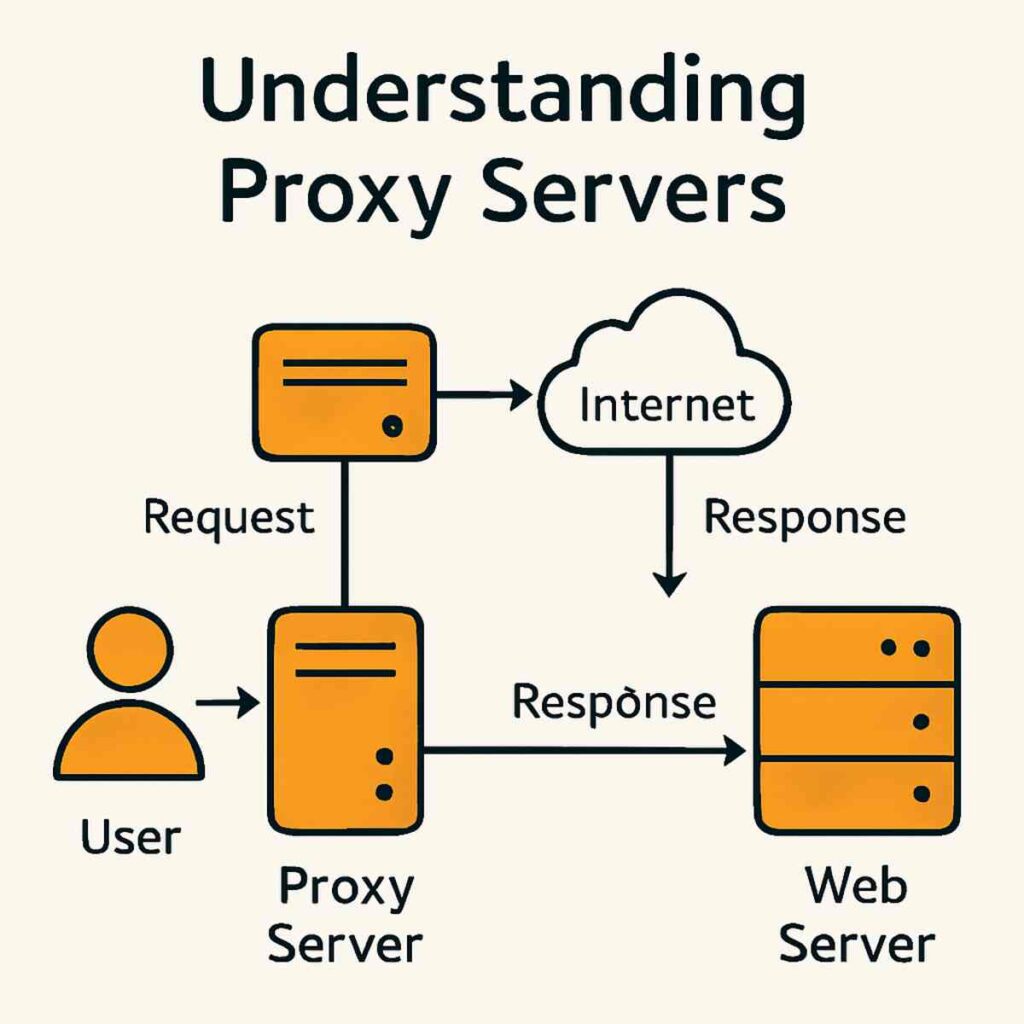
Proxy servers are specialized servers that relay requests from clients seeking resources from other servers. By masking the client’s IP address, proxies provide a veil of anonymity, allowing users to navigate the web without revealing their true identity. The mechanics of proxy servers extend beyond mere privacy; they facilitate caching, load balancing, and content filtering, enhancing the overall browsing experience. How do I find the best datacenter proxies?
The Role of Proxy Servers in Modern Internet
In today’s interconnected world, proxy servers play a critical role in managing internet traffic. They act as gatekeepers, ensuring that data requests are processed efficiently and securely. By handling multiple requests at once, proxies reduce the load on individual servers, contributing to a more stable and fast internet experience.
Enhancing Security with Proxy Servers
Security is a top priority for many internet users, and proxy servers provide a valuable layer of protection. By concealing the user’s IP address, proxies make it more difficult for malicious actors to track or target individuals. Additionally, proxies can filter out potentially harmful content before it reaches the user’s device, preventing malware and phishing attacks.
Proxy Servers and Content Accessibility
Proxies are invaluable for accessing content that may be restricted based on geographical location. By routing traffic through servers in different locations, proxies allow users to bypass regional restrictions and access a wider range of content. This capability is especially useful for accessing streaming services, news sites, and other region-specific platforms.
Types of Proxy Servers
- HTTP Proxies: Primarily used for web traffic, HTTP proxies intercept requests to enhance speed and security. These proxies are adept at caching web pages, thus reducing load times.Caching Capabilities: HTTP proxies store copies of frequently accessed web pages, allowing for quicker retrieval and reduced load times. This is especially beneficial for businesses that experience high traffic volumes.Security Enhancements: By inspecting web requests, HTTP proxies can block malicious content and prevent unauthorized access to sensitive data, offering an added layer of security.
- SOCKS Proxies: Operating at a lower level, SOCKS proxies handle any type of traffic, including email, peer-to-peer, and web. They are versatile but generally slower than HTTP proxies.Versatility and Application: SOCKS proxies can manage a wide array of data types, making them ideal for applications that require more than just web traffic management.Challenges in Speed: Despite their versatility, SOCKS proxies often experience slower performance due to the broad range of data they handle, which can lead to increased latency.
- Transparent Proxies: Often used for caching purposes, these proxies do not modify requests or responses and are identifiable by the server.Ease of Detection: Transparent proxies are easily detectable by target servers, which can lead to potential restrictions on content access.Common Uses: These proxies are commonly used by organizations to monitor user activity and enforce internet usage policies without altering the user experience.
- Anonymous Proxies: Offering anonymity, these proxies mask the user’s IP address without revealing any identifiable information.Privacy Protection: By hiding the user’s IP address, anonymous proxies help maintain privacy and protect against tracking by websites and advertisers.Internet Freedom: Users can access content without restrictions imposed by their geographical location or network provider.
- High Anonymity Proxies: The epitome of privacy, these proxies not only conceal the user’s IP but also obscure the fact that a proxy is in use.Advanced Privacy Measures: High anonymity proxies are designed to provide the highest level of privacy by not revealing any proxy usage to the target server.Use Cases: These proxies are ideal for individuals and businesses that require the utmost discretion in their online activities.
Evaluating Proxy Speed
The term “fast proxy” is frequently bandied about in marketing materials, yet its implications are multifaceted. Speed in the context of proxy services can be dissected into three core components: latency, bandwidth, and stability.
Latency
Latency refers to the delay between sending a request and receiving a response. A low-latency proxy reduces this delay, resulting in faster browsing. Latency is influenced by factors such as server location and network congestion.
- Understanding Latency: Latency is a crucial determinant of how quickly data can be accessed over a network. It affects the real-time responsiveness of applications, which is vital for activities such as online gaming and video conferencing.
- Factors Affecting Latency: Several factors contribute to latency, including the physical distance between the user and the server, as well as the number of intermediary nodes data must pass through. Optimizing these factors can significantly enhance proxy speed.
- Reducing Latency: To minimize latency, users should select proxies that offer servers close to their geographical location. Additionally, using proxies with efficient routing algorithms can further decrease response times.
Bandwidth
Bandwidth denotes the volume of data that can be transmitted over a network in a given time frame. High-bandwidth proxies facilitate the smooth transfer of large data files, streaming media, and other data-intensive activities.
- Importance of Bandwidth: Bandwidth is essential for ensuring that large volumes of data can be transmitted quickly and efficiently. It impacts the quality of streaming services, download speeds, and overall user experience.
- Maximizing Bandwidth: To achieve optimal bandwidth, users should opt for proxy services that offer high-capacity servers and robust network infrastructure. This ensures that data can flow freely without bottlenecks.
- Bandwidth in Action: High-bandwidth proxies are particularly beneficial for businesses that require the transfer of large files, such as media companies, or for users who frequently stream high-definition content.
Stability
A proxy’s stability is paramount for uninterrupted service. Fluctuations in speed or frequent downtimes can undermine the utility of a proxy, no matter how fast it is under ideal conditions.
- Defining Stability: Stability refers to the consistency of a proxy’s performance over time. A stable proxy maintains a steady connection without unexpected interruptions or significant fluctuations in speed.
- Ensuring Stability: To ensure stability, users should look for proxy services with a proven track record of uptime and reliability. This can be assessed by reviewing user feedback and technical specifications.
- Impact of Stability on User Experience: A stable proxy ensures that users can rely on consistent performance, which is critical for time-sensitive activities and maintaining productivity in a business environment.
Choosing the Right Proxy Service
In selecting the most suitable fast proxy service, consider the following criteria:
Server Distribution
A robust proxy service boasts a wide distribution of servers across multiple locations. This geographical diversity not only enhances speed by minimizing latency but also provides access to region-specific content.
- Global Reach: A broad server distribution allows users to connect to servers closest to their physical location, reducing latency and improving speed. This also enables access to content restricted to specific regions.
- Strategic Locations: The presence of servers in strategic locations worldwide ensures that users can bypass censorship and access content from virtually anywhere, providing a seamless browsing experience.
- Evaluating Server Networks: Users should assess the server network of a proxy service by considering the number of servers, their locations, and the quality of network infrastructure.
Protocol Support
Ensure that the proxy service supports the protocols required for your specific use cases, whether that be HTTP for web browsing or SOCKS for more versatile applications.
- Understanding Protocols: Protocols determine how data is transmitted over a network. Different protocols offer varying levels of security, speed, and functionality, catering to diverse user needs.
- Selecting the Right Protocol: Users should choose a proxy service that supports the protocols most relevant to their activities. For instance, HTTP proxies are ideal for web browsing, while SOCKS proxies offer versatility for multiple data types.
- Future-Proofing with Protocols: As technology evolves, new protocols may emerge. Opting for a proxy service that stays current with protocol updates ensures compatibility with future technological advancements.
Security Features
Security is a non-negotiable aspect of any proxy service. Look for features such as SSL encryption, which safeguards data in transit, and DNS leak protection, which prevents inadvertent exposure of IP addresses.
- SSL Encryption: This feature encrypts data sent between the user’s device and the proxy server, preventing unauthorized access and ensuring data integrity.
- DNS Leak Protection: By preventing DNS leaks, this feature ensures that users’ IP addresses remain concealed, even if there are vulnerabilities in the network.
- Additional Security Measures: Advanced security features such as malware scanning and intrusion detection systems can further protect users from online threats.
Reliability and Uptime
Reliability is gauged by the service’s uptime percentage. A proxy service with a high uptime ensures consistent performance and accessibility.
- Measuring Uptime: Uptime refers to the percentage of time a service is operational and accessible. High uptime is indicative of a reliable proxy service that users can depend on.
- Ensuring Reliability: Users should look for proxy providers with a strong track record of uptime, backed by service-level agreements (SLAs) that guarantee performance standards.
- Importance of Consistency: Consistent performance is crucial for maintaining productivity, especially for businesses that rely on proxies for critical operations.
Customer Support
Responsive customer support is indicative of a service’s commitment to its users. Opt for providers that offer round-the-clock support and multiple communication channels.
- Evaluating Support Options: Comprehensive customer support includes multiple contact methods such as live chat, email, and phone support, ensuring users can quickly resolve issues.
- 24/7 Availability: Round-the-clock support is essential for addressing urgent issues that may arise outside of standard business hours, minimizing downtime and frustration.
- Assessing Support Quality: Users can gauge the quality of customer support by reading reviews and evaluating the response times and expertise of support representatives.
The Role of Fast VPNs
While proxies primarily serve as intermediaries for specific applications, Virtual Private Networks (VPNs) encompass entire network connections, offering an additional layer of security and anonymity.
Fast VPN vs. Fast Proxy
Though both proxies and VPNs serve to anonymize and protect data, their methodologies and applications differ. VPNs encrypt all network traffic, providing comprehensive privacy at the cost of increased latency compared to proxies. Conversely, fast proxies offer speed enhancements for particular applications, making them ideal for users who prioritize speed over holistic encryption.
- Encryption and Privacy: VPNs provide end-to-end encryption, safeguarding all data transmitted over the network. This is particularly useful for users who require a high level of privacy and security.
- Latency Considerations: While VPNs offer robust security, they may introduce additional latency due to the encryption process. In contrast, proxies focus on speed for specific applications, making them suitable for users who prioritize performance.
- Choosing Between VPN and Proxy: The choice between a VPN and a proxy depends on the user’s needs. Those seeking comprehensive security should opt for a VPN, while users focused on speed may prefer a fast proxy.
- Use Cases: VPNs are ideal for securing entire networks, making them suitable for businesses and individuals seeking holistic privacy solutions. Fast proxies, however, are better suited for optimizing specific online activities.
Practical Applications
- Circumventing Geo-Restrictions: Fast proxies enable access to content that may be geographically restricted, such as streaming services or regional news outlets.
- Breaking Barriers: By routing traffic through servers in different regions, fast proxies allow users to bypass geographical restrictions and access a broader range of content.
- Streaming Services: Users can enjoy content from streaming platforms that may be unavailable in their region, providing access to a wider array of entertainment options.
- Global News Access: Fast proxies enable users to access news outlets from around the world, offering diverse perspectives on current events.
- Enhancing Online Privacy: By masking IP addresses, proxies protect users from targeted advertising and potential cyber threats.
- Anonymity Online: Proxies conceal users’ true IP addresses, making it more difficult for advertisers and trackers to gather data on browsing habits.
- Cybersecurity: By preventing direct exposure of IP addresses, proxies reduce the risk of cyberattacks and identity theft, enhancing users’ online security.
- Privacy for All: Proxies offer privacy solutions for both individual users and businesses, ensuring that sensitive data remains protected from prying eyes.
- Optimizing Network Performance: Businesses utilize proxies to cache frequently accessed content, thereby reducing bandwidth costs and improving load times for end-users.
- Cost-Effective Solutions: By caching content, proxies reduce the need for repeated data retrieval, leading to significant savings on bandwidth costs.
- Improved User Experience: Faster load times enhance the user experience, making websites and applications more responsive and engaging for users.
- Business Efficiency: Efficient network performance contributes to increased productivity and customer satisfaction, benefiting businesses of all sizes.
Conclusion
Selecting the best fast proxy services necessitates a nuanced understanding of both technical specifications and user requirements. By considering factors such as server distribution, protocol support, and security features, users can identify a proxy service that aligns with their needs. Ultimately, the synergy between speed, reliability, and security defines the efficacy of a proxy service, ensuring an optimal online experience.
In the ever-evolving landscape of digital connectivity, the judicious selection of proxy services is a testament to an individual’s commitment to privacy, performance, and unfettered access to information. Whether for personal use or business applications, the right proxy service can significantly enhance the online experience, providing users with the tools they need to navigate the digital world with confidence and ease.